Is This It?

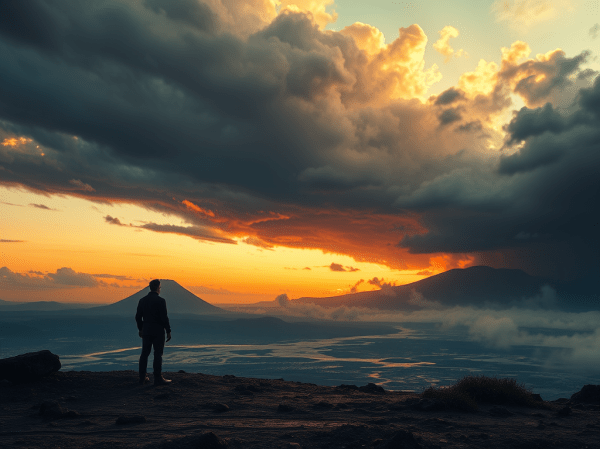
There’s been a lot of movement lately—both below our feet and all around us. The Ring of Fire has been rumbling again, the news cycle is filled with reports of quakes, eruptions, and more shootings than I can emotionally register. It’s hard not to feel the earth itself groaning.

And in times like these, people start to ask: Is this it?

Is this what the Bible warned us about? The birth pains? The unraveling?

I’ve asked it too.

But then I remember: people were asking the same question in 1942, watching the world burn in real time. They asked it during the Black Plague, during the Spanish Flu, during slavery, famine, persecution. The question isn’t new.

What’s striking is not the fear—but the human pattern of forgetting that we’ve been here before.

This doesn’t mean we ignore the warnings. But it reminds me to live alert, not alarmed.

Maybe every generation is given a window to wake up. To look at the world and reckon with what we’ve built, and who we’ve become.

And maybe “the end” isn’t always about apocalypse. Maybe it’s also about invitation.

To return to God.
To bolster our faith.
To strengthen our resolve to love, to live with truth, to walk in light.

So no, I don’t know if this is it. But I know this is real. And that’s enough to live awake—and to return.

A Little Peek at What I’m Writing

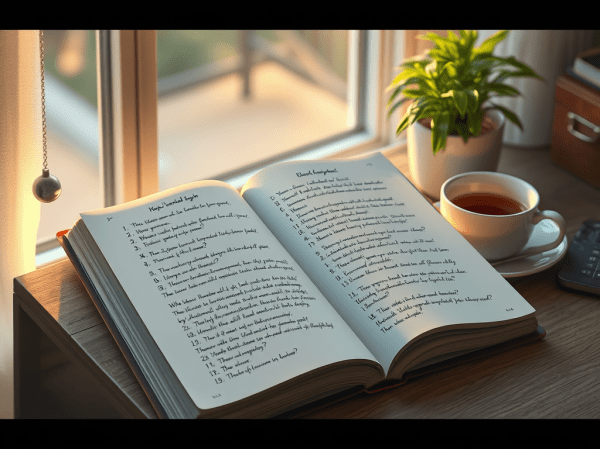
So, I’ve been working on this book—First, Know Thyself—and it’s not really a “book” in the self-help sense. It’s more like a conversation I wish someone had with me years ago. The kind that doesn’t try to fix you, but asks just enough of the right questions to get you thinking, “Wait… what do I actually value? And why do I keep choosing things that don’t match?”

I keep circling this idea that so much stress isn’t about doing too much—it’s about doing what doesn’t line up with who we are. And we feel it. In our bodies. In our relationships. In that gut sense of being slightly off-kilter, even when everything looks “fine” on paper.

The book is part reflection journal, part framework, and part gentle kick in the pants. I wrote it to help those living the chaos of making decisions out of fear, or habit, or someone else’s expectations. And I wanted to explore what it might look like to choose differently—on purpose, with a little more clarity and a lot more compassion.

Anyway, it’s coming along. Slowly. Honestly. And if it helps even one person breathe easier in their own skin, it’ll be worth it.

More soon. 💭

So busy

Between the new puppy, finishing my first book, and life, I have not had time to put my ponderings down in print. Though I do fall asleep with lots of thoughts each night…. Please stay with me more to come soon!

Jules Verne Knew the Future


—but he couldn’t have imagined what we’d do with it.

I’ve been reading Five Weeks in a Balloon, and there’s this line that stopped me in my tracks. Verne observes that Europe’s soil is becoming exhausted, and that America will one day face the same fate. Eventually, he predicts, Africa will become the agricultural center of the world.

It’s eerie how right he was.

Even in the 1800s, the land was already giving its warning. Generations of over-farming had stripped the soil bare. And he could see what was coming: extraction without regeneration, empire without restraint. He understood that the Earth doesn’t just keep giving. It keeps score.

But what he couldn’t have predicted was how far we’d go to override the land’s limits.

Instead of listening, we threw technology at the problem—fertilizers, monocrops, irrigation systems that drained rivers dry. We pushed yields higher and faster, with no thought to the long game. We engineered volume, not vitality. And now? We’re circling back. In the States, we’re just now starting to remove toxic chemicals from our food—finally catching up to what Europe understood decades ago. We talk about organic, sustainable, chemical-free like it’s cutting-edge… but we still don’t have a clue how to meet global demand without exhausting the Earth in the process.

Verne imagined Africa as a rising breadbasket. And today, yes—it holds some of the richest uncultivated land on the planet. But so much of that land is leased out to foreign entities, used for exports, or left vulnerable to climate shocks. We took promise and turned it into profit.

So here’s what I’m sitting with:
Can we still be innovative without being so destructive?

Can we imagine a future where technology partners with nature instead of overpowering it? Where food systems aren’t just efficient, but equitable? Where abundance doesn’t mean burnout?

And in the face of something so big, I ask the question I think most of us quietly carry: What can one person do?

Maybe we start by paying attention. By choosing differently, even in small ways. By asking better questions about what we eat, how it’s grown, and who gets to flourish. Maybe we start by imagining a future that doesn’t just feed the world—but heals it.

My Brain Wasn’t in Its Right Mind: Why Suicide Isn’t Selfish—It’s Chemistry

I was watching The Bear and contemplating the suicidal thought process.
The people left behind are trying to understand, to deal with the uncertainty and guilt.
But as someone who has survived suicide, let me ease your burden.

When I’m in the throes of suicidal ideation, basically, which means I’m considering and thinking about ending life—my brain is literally not in its right mind.
There is no reason or reasoning. It’s like trying to think through static.
It feels as though you’re swimming in dark air, not even water to hold you up. You can only see two inches in front of you, if that. It’s like there’s a wall blocking your mind from going forward or backward.

And yet, there’s so much noise—a cacophony of sounds: yelling, anguish, tears, laughter.
And here’s the weird part—there’s also nothingness.
No future. No past. No now.
Just the utter absence of hope.

How could I possibly explain that to anyone while I’m in it?

All I wanted was full stop.
To shut it off—the pain, the noise, the heaviness of existing.

Before my attempt, there was pain. Deep, deep loneliness. And the belief that no one would ever understand me.
For me, Jesus healed that pain. He filled the void that tortured me.

And still, I suffer from major depressive disorder—because it is not just trauma. It is chemistry.

But now, when I feel that “dark night of the soul” approaching, I’ve learned to hold on—and to reach out.

I didn’t know that then.
And if I had completed my trial, those left behind would have been left asking:
Why? Could I have seen it? Could I have done more? Did I miss something?

The honest answer is: maybe.
But understand—that is not a statement of guilt.
It’s a statement of awareness.

We need to let others know we see them.
Tell them we love them.
Ask them if they’re okay—really okay.

Not everyone who faces trauma will become suicidal.
But for some of us, our brain chemistry doesn’t bounce back easily—if at all.

When someone is in suicidal pain, their brain is dysregulated.
Serotonin and dopamine—those systems that help with hope, reward, motivation—are off balance.
Not just low—disrupted.

It’s about malfunctioning circuits. It’s about the way stress, trauma, and hopelessness chemically rewire perception.

But the beautiful, painful truth is: rewiring goes both ways.

With help, time, love, faith, and treatment—things can shift.
But no one in that moment can see it.

So, if you’re someone who’s never been there: don’t try to fix the pain. Just stay close.
And if you have been there: I see you.
I’m still here.

And so are you.

If you need emotional support, reach out to the national mental health hotline: 988.

Time Is a Funny Creature

Time is a strange thing. When I’m writing—really writing—I forget it exists. Hours pass in what feels like moments, and I resurface blinking, surprised the sun has moved. But at 3 a.m., cradling a squirmy puppy and begging her to please go back to sleep? Every minute drips like honey from a spoon. Thick. Slow. Unrelenting.

I’ve been thinking about how time doesn’t move the same for the heart as it does for the clock. When I’m in flow, time speeds up. When I’m in waiting, it slows to a crawl. And somehow, both feel precious.

Maybe time’s not meant to be measured in hours and minutes but in presence. In how deeply we’re living the moment we’re in—whether it’s a burst of creative energy or a quiet, tired vigil with a tiny creature learning the rhythm of the world.

Either way, I’m here. Pondering onward.

—Christine

Blog at WordPress.com.

Up ↑