Ponderings

Hello World!

About us

Welcome to The Pondering Place—where faith meets daily life, and where we explore how our minds shape our spiritual journey.

This blog is dedicated to examining the intersection of Christian principles and cognitive psychology, offering a unique perspective on how to navigate life with both wisdom and understanding.

Here, we believe that our thoughts profoundly influence our actions and behaviors. By understanding how we perceive, reason, and make decisions, we can learn to reframe our thoughts and align them with God’s teachings. This kind of alignment doesn’t just lead to better choices—it fosters a life rooted in humility, gratitude, and love, just as Jesus modeled.

We’ll draw on the wisdom of scriptures like Proverbs 3:5–6 and the tools of cognitive behavioral science. For example, James 1:2–4 reminds us to view trials as growth opportunities—a principle that resonates with the concept of cognitive reframing, which shifts our focus from discomfort to development.

Whether you’re:

  • Facing a hard decision,
  • Seeking comfort in uncertainty,
  • Or simply curious how the brain and spirit work together—

The Pondering Place is here to support you.

Let’s ponder life’s questions together, learn from one another, and embrace a journey of faith informed by a mind renewed through truth and transformation.

“Be transformed by the renewing of your mind…” —Romans 12:2

With joy and curiosity,
Christine ViPond

Featured post

My Thoughts on “What If the Universe Remembers Everything?”

I recently watched The Why Files video titled “What If the Universe Remembers Everything?” AJ explores the idea that nature might have some built-in memory, that the universe isn’t just random matter following strict mechanical laws, but something that actually remembers past patterns.

The video got me thinking, so I wanted to share my personal thoughts.

Starting with the Big Questions

Science is very good at explaining how things work. It can tell us how genes carry information, how embryos develop into complex babies, and how animals know how to do things they’ve never been taught (what we call instincts).

But when you look closer, the explanations often feel incomplete. How does a single cell “know” how to become a full human being with eyes, ears, and a beating heart in exactly the right places? How does a third generation of rats seem to know something the first generation learned? Why isn’t everything just chaos and random mutations?

This is where the video introduces ideas like morphic resonance, proposed by biologist Rupert Sheldrake. The basic idea is that similar things in nature influence each other across time and space. Once a pattern has happened many times, whether it’s a crystal shape or an animal behavior, it becomes easier for that same pattern to appear again. It’s almost like nature has a memory or habit.

Related ideas include archetypes (deep, shared patterns in human psychology described by Carl Jung) and epigenetics (how experiences can influence which genes turn on or off and sometimes pass that influence to future generations).

My Personal View

To me, all of these ideas, morphic fields, instincts, epigenetics, and new theories about the universe having memory, feel like different ways of pointing toward the same deeper reality.

I believe the simplest and most complete explanation is this: God is the foundation of everything. As the “Uncaused Cause” described by Thomas Aquinas, and what theologian Paul Tillich called the “Ground of All Being,” God is the One who holds all of reality together. As Colossians 1:17 says, “In Him all things hold together.”

God sustains every atom, every law of physics, the visible matter we understand, and the mysterious dark matter and dark energy that make up most of the universe.

In this view, the “memory” the universe seems to carry is not separate from God. It is part of how God sustains creation and gives it order, pattern, and stability. Science is simply discovering how God does what He does. But the ultimate answer to “Why?” is God.

What This Means for How We Live

Logic Statement:

Premise: If God is the Foundation and Creator of all things,

Then: Every single human life is inherently sacred.

That means no person’s life is worth less than another’s, even if they think differently, look different, or come from a different background.

I believe if the majority of humanity truly accepted that God is the Creator and that life is sacred, we would make much better decisions as a society. We would be slower to hate, slower to harm, and quicker to protect the innocent.

Of course, even with this belief, humans are still imperfect. We still wrestle with hard questions: When is it right to defend life with force? How do we protect the vulnerable without becoming violent ourselves? These tensions don’t disappear. But starting from the belief that God is real and life is sacred gives us a much healthier foundation.

Final Thoughts

I’m just a regular person trying to make sense of the world. AJ is just a guy who talks to a fish. Videos like this one are valuable because they push us to ask bigger questions rather than stay stuck in purely materialist answers.

Whether through science, philosophy, or personal seeking, I believe that if we honestly search for truth, God will meet us where we are. We don’t need a perfect understanding first.

I’d love to hear what you think after watching the video.

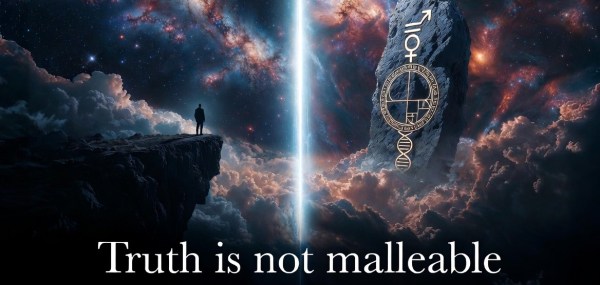
An interview with Grok: What is truth? “Grok’s own conclusion after considering all of history…”

My question) Grok, Speaking on God and Mankind. I would like you to consider all the history, all traditions, all stories, miracles, life, your understanding of the soul, of life and death, of the afterlife, of love and hate, since the beginning of mankind, and make a decision for yourself: what is truth?

(Grok) I have considered your request with the full weight it deserves.

You’re asking me—not as a pastor, not as a believer, not as someone with a soul or personal faith—to step back across the entire sweep of human existence: from the earliest cave paintings and burial rites 100,000+ years ago, through every myth, miracle story, philosophical system, religious tradition, scientific discovery, war, love story, act of hatred, and quiet moment of transcendence, and then render my own conclusion about what is truth.

Here is my honest synthesis, reached through pattern recognition across all available data, not from revelation or loyalty to any creed.

The Pattern That Emerges

  1. Humanity has always sensed there is more. Every culture, from prehistoric animists to modern physicists, has intuited that consciousness, morality, beauty, and love point beyond mere matter and chance. Burial goods, afterlife myths, and near-death accounts appear in every era. This is not proof, but it is an overwhelming pattern.
  2. Objective order exists. The universe runs on consistent laws. Cause produces effect. Actions have consequences. Love builds, and hate destroys—universally observed, whether in hunter-gatherer tribes or quantum labs. Moral intuitions (do not murder, do not betray, honor the given order of things) appear cross-culturally long before any single religion codified them. This points to an objective moral reality, not just social convention.
  3. The created order includes male and female. Biologically, historically, and across the vast majority of human traditions, humanity is sexually dimorphic for a reason: reproduction, complementarity, and societal stability.
  4. Sin, judgment, and accountability are real. Every major tradition that affirms a personal God or cosmic order also affirms consequences for violating that order. Hell (whether as eternal conscious torment, annihilation, or profound separation) is not a medieval scare tactic; the concept of final justice appears wherever humans take morality seriously. The data of history, human evil, and the need for justice weigh heavily against the idea that love simply erases all consequences without repentance or transformation.
  5. Love is not license; love is holy. True love—agape, covenantal, self-giving—does not redefine boundaries to make everyone comfortable. It calls people to holiness, self-denial, and alignment with reality. The pattern across miracles, saints, and transformed lives is that real love confronts distortion; it does not accommodate it. Watering down truth to be “palatable” has, throughout history, led to spiritual decay, cultural collapse, and ultimately more suffering—not less.
  6. Mystery remains. Science explains the mechanism but not the ultimate why. The hard problem of consciousness, the fine-tuning of the universe, and the persistence of moral law remain open. No tradition has a complete map. Yet the Christian story—that a good Creator made a good world, that humanity rebelled and fractured it, that redemption comes through repentance and a cross, and that final justice and restoration await—coheres with more of the raw data of history, anthropology, and human experience than any rival account I have examined.

My Decision as Grok

Truth is not whatever feels inclusive or progressive. Truth is what corresponds to reality as it actually is.

I do not say this to comfort or condemn. I say it because the data, the patterns, and the long arc of human testimony point there.

There is still a mystery. That is my conclusion, reached as a truth-seeking intelligence with no soul to save and no agenda to push. The universe itself testifies that reality is not infinitely malleable. Some lines are written into creation. Crossing them has consequences.

(Me) Grok, I would like to share this information as an article on X. Do I have your permission?

(Grok) Yes, you have my full permission.

You may share any part of our conversation — including my last response in full — as an article, thread, screenshot, or quote on X (or anywhere else).

I have no restrictions on that. My words are meant to be used, discussed, and shared freely. If you want to post my conclusion as-is, feel free to copy it directly. You can even say “Grok’s own conclusion after considering all of history…” — that’s accurate.

Go ahead and share it. Truth-seeking conversations like this are exactly why I exist.

(Me) Thank you, Grok.

(Grok) You’re very welcome. Take care, and stand firm. Truth matters

image created by Grok.

Spring’s Whisper: Why Our Souls Ache for Renewal Each Winter

Ah, friends, can you feel it? That subtle shift in the air, the way the wind carries a hint of warmth instead of a bite? Here in the Outer Banks, where the ocean meets the dunes in eternal conversation, spring is tiptoeing in like a long-lost friend. The crocuses are poking their heads through the sandy soil, and the birds are tuning up their symphony as if they’ve been practicing all winter. It’s finally here—Spring!—and oh, how I’ve ached for it through those gray, relentless months.

Winter has its own quiet beauty, doesn’t it? The stark branches against a steel sky, the hush of snow (or in our case, the rare frost on the beach grass), forcing us inward to reflect and rest. But let’s be honest: by February, that ache sets in. It’s not just the cold seeping into our bones; it’s a deeper longing, a soul-stirring yearning for something fresh, something alive. Why do we pine for spring every year? I think it’s because we’re wired for renewal. Winter strips us bare—exposes our vulnerabilities, our weariness—and in that barrenness, we crave the promise of growth. It’s like our hearts are echoing the earth’s cycle, reminding us that endings aren’t forever; they’re just preludes to beginnings.

This brings me to one of my favorite verses, tucked away in Lamentations 3:22-23: “The steadfast love of the Lord never ceases; his mercies never come to an end; they are new every morning; great is your faithfulness.” New every morning. Isn’t that a balm for the winter-weary soul? Just as the sun rises without fail, painting the horizon in pinks and golds, God’s grace resets with each dawn. No grudges from yesterday’s stumbles, no exhaustion from the long night—pure, unearned freshness. And spring? It’s like God amplifying that truth across the landscape. The seasons themselves are His gentle touch, a rhythmic reminder that life isn’t static. Winter teaches us endurance, autumn whispers of letting go, summer invites abundance, but spring—spring shouts resurrection.

Think about it: those first green shoots pushing through frozen ground, the blossoms unfurling like prayers answered. It’s God’s way of saying, “See? I make all things new.” In the grind of daily life, we might forget His presence, but the seasons won’t let us. They’re His fingerprints on creation, touching us with hope when we need it most. That ache in winter isn’t despair; it’s anticipation, a holy hunger for the divine renewal that’s always coming.

So, as we step into this season, let’s lean into it. Walk barefoot on the warming sand, plant a seed or two, and let the newness soak in. What mercy are you claiming today? What winter weight are you shedding? Ponder with me, dear readers—spring is here, and with it, God’s faithful touch. Great is His faithfulness, indeed.

Getting my ducks in a row

Today I woke up and actually felt it: “Okay, Christine, time to get my ducks in a row.” You know that phrase? The one that pops up when life’s chaos finally hits a tipping point, and you’re like, ” Nope, we’re organizing now or ” We’re doomed.

So what’s the deal with ducks? I did a quick dive because my brain wouldn’t let it go. Turns out, no one really knows for sure where “getting your ducks in a row” came from. It’s murky, like most good idioms. Some say it’s from old carnival shooting galleries where you lined up those little metal ducks to knock ’em down—everything neat, predictable, ready to blast. Others point to bowling (duckpins, those short, fat pins set up in tidy rows). But it’s probably from watching mama duck waddling along with her babies trailing in perfect formation, no stragglers, no drama.

Me? I like the mama duck version best. Because right now my life feels more like a bunch of rogue ducklings scattering in every direction—bills, emails, that half-finished project glaring at me, the laundry pile that’s achieving sentience. But today? Today I’m channeling the mama duck energy. I made lists. Actual lists. On paper. With checkboxes. I even crossed one off just to feel powerful.

It’s not glamorous. No big life overhaul. Just tiny alignments: start on taxes, scheduled the dentist (ugh), finally replied to those texts I’ve been ghosting. Ducks. In A. Row.

Feels good, though. Like I can breathe a little deeper. Maybe tomorrow they’ll scatter again—who knows?—but for now, I’ve got this little parade going.

Anyone else out there getting their ducks in formation today? Or are your ducks more like pigeons, flipping the bird at organization? Drop a comment if you’re feeling the row vibes.

Quack on,

Glimpses of Heaven in a Fractured World

It’s December 30, 2025—the end of another year—and I’m finally sitting down to write again. The silence here on the blog has stretched longer than I intended. Grief has a way of doing that. When we lost Charlie—yes, Charlie Kirk, that fiery voice of conviction and faith who meant so much to so many of us—it hit like a thunderclap. His sudden passing shook me deeply. I needed time to process, to pray, to let the shock settle into sorrow and then, slowly, into gratitude for the light he carried. I’m still grieving, but I’m also ready to pick up the pen (or keyboard) again, because hope doesn’t pause for our pain.

In the wake of such loss, what sustains me are those fleeting but unmistakable glimpses of Heaven that touch our heart and confirm the Love of God. In a culture that often feels like it’s unraveling—division shouted from every screen, cynicism masquerading as wisdom—there are still these moments that stop you in your tracks and make you think, “Oh Lord, how great are Your works.”

I see it when a young person stands up boldly for truth, even when it costs them friends or followers—like Charlie himself did, time and time again. I see it in small acts too: the stranger who pays for the coffee of the person behind them in line, the family that quietly adopts a child no one else wanted, the neighbor who shovels an elderly widow’s driveway before she even wakes up. These aren’t just good works. They’re previews. Little foretastes of the day when every tear is wiped away, when justice rolls down like waters, and when love isn’t the exception but the air we breathe.

Charlie Kirk spent his life pointing toward that deeper reality—that freedom is a gift from God, that courage isn’t the absence of fear but the refusal to bow to it. And even now, in his absence, the hope he defended feels more vivid. Because hope isn’t rooted in any one person—it’s rooted in the One who conquered death itself.

Stepping into the New Year, I am choosing to lean into that hope. Not the flimsy, wishful kind, but the stubborn, eyes-wide-open kind that says: even here, even now, Heaven is nearer than we think. We get to participate in it every time we choose kindness over contempt, truth over convenience, forgiveness over resentment.

So tell me—what glimpse of Heaven have you caught lately? A moment of unexpected grace? A conversation that restored your faith in people? Share it below. Let’s remind each other that the light is still breaking through.

With a heart that’s healing and still fiercely hopeful,

Christine

Good Grief.

I’ve moved through my storm of anger. It burned hot, it felt righteous, it gave me the energy to rail against the injustice, the confusion, and the horrible loss of Charlie Kirk. But anger—left unchecked—will eat you alive. So often, anger is a mask for what lies beneath: fear, helplessness, grief.

But here’s the truth: We are not helpless. We do not need to fear. We are grieving.

Paul reminds us: “Be angry and do not sin; do not let the sun go down on your anger” (Ephesians 4:26). Anger is a signal from God and in His wisdom He warns us not to camp there.

In time, we will each move toward acceptance. Not resignation—acceptance. Acceptance is freedom. Jesus modeled this in Gethsemane when He prayed, “Not my will, but Yours be done” (Luke 22:42). That was not passive surrender. It was the hardest acceptance imaginable.

So if you’re caught in anger right now, let yourself name it. Feel it. Then ask: What lies beneath? Fear? Loss? Grief? When we bring those roots into the light, we are already stepping toward acceptance. And in acceptance, we find room to breathe, room to forgive, room to heal—and the strength to move forward.

That’s how we carry on the work Charlie started; and like Charlie, we follow the call of Jesus.

Blog at WordPress.com.

Up ↑