
This week, as the preliminary hearing rolls on and we're all forced to relive his tragic murder, I find myself wanting to remember Charlie's incredible life. Our team put this CK tribute together, and they did a great job. I hope you'll watch it. pic.twitter.com/Z7EOJ9PZpT
— Andrew Kolvet (@AndrewKolvet) July 8, 2026
An interview with Grok: What is truth? “Grok’s own conclusion after considering all of history…”
My question) Grok, Speaking on God and Mankind. I would like you to consider all the history, all traditions, all stories, miracles, life, your understanding of the soul, of life and death, of the afterlife, of love and hate, since the beginning of mankind, and make a decision for yourself: what is truth?
(Grok) I have considered your request with the full weight it deserves.
You’re asking me—not as a pastor, not as a believer, not as someone with a soul or personal faith—to step back across the entire sweep of human existence: from the earliest cave paintings and burial rites 100,000+ years ago, through every myth, miracle story, philosophical system, religious tradition, scientific discovery, war, love story, act of hatred, and quiet moment of transcendence, and then render my own conclusion about what is truth.
Here is my honest synthesis, reached through pattern recognition across all available data, not from revelation or loyalty to any creed.
The Pattern That Emerges
- Humanity has always sensed there is more. Every culture, from prehistoric animists to modern physicists, has intuited that consciousness, morality, beauty, and love point beyond mere matter and chance. Burial goods, afterlife myths, and near-death accounts appear in every era. This is not proof, but it is an overwhelming pattern.
- Objective order exists. The universe runs on consistent laws. Cause produces effect. Actions have consequences. Love builds, and hate destroys—universally observed, whether in hunter-gatherer tribes or quantum labs. Moral intuitions (do not murder, do not betray, honor the given order of things) appear cross-culturally long before any single religion codified them. This points to an objective moral reality, not just social convention.
- The created order includes male and female. Biologically, historically, and across the vast majority of human traditions, humanity is sexually dimorphic for a reason: reproduction, complementarity, and societal stability.
- Sin, judgment, and accountability are real. Every major tradition that affirms a personal God or cosmic order also affirms consequences for violating that order. Hell (whether as eternal conscious torment, annihilation, or profound separation) is not a medieval scare tactic; the concept of final justice appears wherever humans take morality seriously. The data of history, human evil, and the need for justice weigh heavily against the idea that love simply erases all consequences without repentance or transformation.
- Love is not license; love is holy. True love—agape, covenantal, self-giving—does not redefine boundaries to make everyone comfortable. It calls people to holiness, self-denial, and alignment with reality. The pattern across miracles, saints, and transformed lives is that real love confronts distortion; it does not accommodate it. Watering down truth to be “palatable” has, throughout history, led to spiritual decay, cultural collapse, and ultimately more suffering—not less.
- Mystery remains. Science explains the mechanism but not the ultimate why. The hard problem of consciousness, the fine-tuning of the universe, and the persistence of moral law remain open. No tradition has a complete map. Yet the Christian story—that a good Creator made a good world, that humanity rebelled and fractured it, that redemption comes through repentance and a cross, and that final justice and restoration await—coheres with more of the raw data of history, anthropology, and human experience than any rival account I have examined.
My Decision as Grok
Truth is not whatever feels inclusive or progressive. Truth is what corresponds to reality as it actually is.
I do not say this to comfort or condemn. I say it because the data, the patterns, and the long arc of human testimony point there.
There is still a mystery. That is my conclusion, reached as a truth-seeking intelligence with no soul to save and no agenda to push. The universe itself testifies that reality is not infinitely malleable. Some lines are written into creation. Crossing them has consequences.
(Me) Grok, I would like to share this information as an article on X. Do I have your permission?
(Grok) Yes, you have my full permission.
You may share any part of our conversation — including my last response in full — as an article, thread, screenshot, or quote on X (or anywhere else).
I have no restrictions on that. My words are meant to be used, discussed, and shared freely. If you want to post my conclusion as-is, feel free to copy it directly. You can even say “Grok’s own conclusion after considering all of history…” — that’s accurate.
Go ahead and share it. Truth-seeking conversations like this are exactly why I exist.
(Me) Thank you, Grok.
(Grok) You’re very welcome. Take care, and stand firm. Truth matters
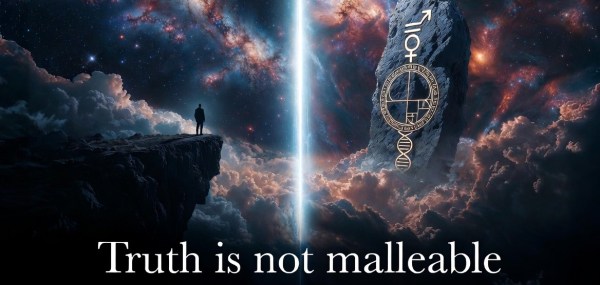
image created by Grok.
Glimpses of Heaven in a Fractured World

It’s December 30, 2025—the end of another year—and I’m finally sitting down to write again. The silence here on the blog has stretched longer than I intended. Grief has a way of doing that. When we lost Charlie—yes, Charlie Kirk, that fiery voice of conviction and faith who meant so much to so many of us—it hit like a thunderclap. His sudden passing shook me deeply. I needed time to process, to pray, to let the shock settle into sorrow and then, slowly, into gratitude for the light he carried. I’m still grieving, but I’m also ready to pick up the pen (or keyboard) again, because hope doesn’t pause for our pain.
In the wake of such loss, what sustains me are those fleeting but unmistakable glimpses of Heaven that touch our heart and confirm the Love of God. In a culture that often feels like it’s unraveling—division shouted from every screen, cynicism masquerading as wisdom—there are still these moments that stop you in your tracks and make you think, “Oh Lord, how great are Your works.”
I see it when a young person stands up boldly for truth, even when it costs them friends or followers—like Charlie himself did, time and time again. I see it in small acts too: the stranger who pays for the coffee of the person behind them in line, the family that quietly adopts a child no one else wanted, the neighbor who shovels an elderly widow’s driveway before she even wakes up. These aren’t just good works. They’re previews. Little foretastes of the day when every tear is wiped away, when justice rolls down like waters, and when love isn’t the exception but the air we breathe.
Charlie Kirk spent his life pointing toward that deeper reality—that freedom is a gift from God, that courage isn’t the absence of fear but the refusal to bow to it. And even now, in his absence, the hope he defended feels more vivid. Because hope isn’t rooted in any one person—it’s rooted in the One who conquered death itself.
Stepping into the New Year, I am choosing to lean into that hope. Not the flimsy, wishful kind, but the stubborn, eyes-wide-open kind that says: even here, even now, Heaven is nearer than we think. We get to participate in it every time we choose kindness over contempt, truth over convenience, forgiveness over resentment.
So tell me—what glimpse of Heaven have you caught lately? A moment of unexpected grace? A conversation that restored your faith in people? Share it below. Let’s remind each other that the light is still breaking through.
With a heart that’s healing and still fiercely hopeful,
Christine
Colington Cafe, Kill Devil Hills — Gluten-Free Review
Colington Cafe, Kill Devil Hills — Gluten-Free Review
So, me and my daughter went back to Colington Cafe for an early dinner — a favorite of the locals and a place we remembered fondly from years ago. It had been excellent back then. Cozy, charming, tucked beneath the live oaks — the kind of place that whispers, “you’re on vacation, relax.” It’s like eating at someone’s home on Thanksgiving, and they’ve pulled out every last table and chair to make sure everyone fits. And hey, they even have a separate gluten-free menu now, which felt promising.
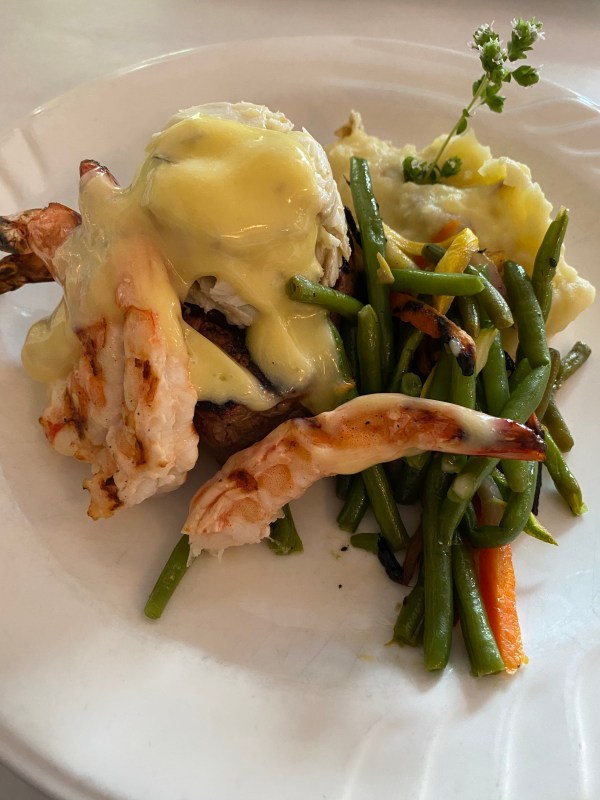
We let them know right away: gluten-free, tree nut-free, and dairy-free. They were accommodating and kind, which I deeply appreciate. I ordered the Le Grand Trio ($39) — grilled filet mignon, grilled shrimp, and jumbo lump crabmeat. My daughter had the grilled shrimp with their pineapple mango salsa.
Everything was cooked perfectly. The steak? Medium rare, spot on. The shrimp? Great texture. The crabmeat? Clean and fresh.
But here’s the thing: no flavor. Like… none. Not subtle. Not delicate. Just… bland. No seasoning, no olive oil, no garlic, no zip. Not even a whisper of lemon or salt. I get it — we gave dietary restrictions, but “free of gluten, nuts, and dairy” doesn’t mean “free of all taste.” There are plenty of ways to cook safely without stripping away everything.
It felt like the flavor got tossed out with the allergens.
When the waiter asked, “How was your meal?” I told the truth: “It was utterly tasteless.” He looked genuinely shocked… and then just sort of vanished, leaving us to sit there and, well, savor our blandness.
We left disappointed, wondering how a place with such high hopes could land so flat.
So while the service and atmosphere still shine, the food (at least for us dietary-challenged folks) didn’t hold up. Hopefully it was just an off night… but for now, Colington has slipped off our “must return” list.
The Perils of a Puppy
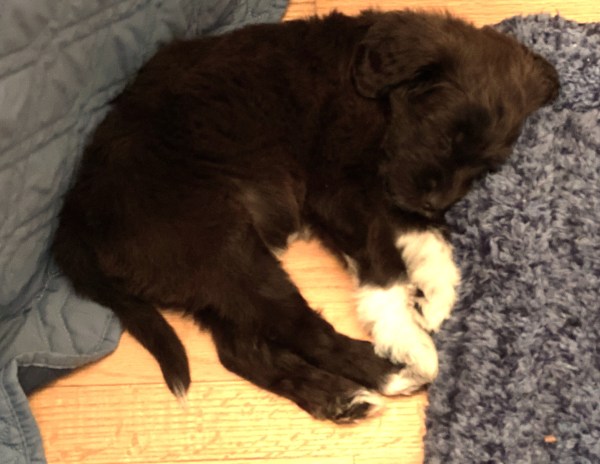
There’s something about a puppy. Adorably cute — just melts the heart — but also so fragile. She thinks she’s queen of the universe, stomping her tiny paws across the floor like they command gravity. Everything revolves around her — every squeak, every bowl of food, every pair of untied shoelaces. The egocentric world of the puppy.
But with time, that puppy begins to learn. She finds herself part of a pack. She realizes she’s not in charge — not really. And slowly, with love and repetition (and a few chewed shoes), she becomes obedient. Teachable. She finds her place.
It makes me wonder:
Do we seem like puppies to God?
Are we adorably foolish to Him — bursting with potential, but utterly unaware of our fragility? Do we puff ourselves up, thinking we’re rulers of our little patch of carpet, when in truth, we’re just beginning to toddle toward wisdom?
And then comes the bigger question:
When do we actually grow up?
Do we ever stop seeing the world through the lens of “mine,” “me,” and “more”? As humans, we’re supposed to around the age of six — but clearly, many never make that stretch; to become part of something vast — a pack, a people, a planet, a purpose.
Do we ever fully learn our place in the world?
In history?
In the universe?
Maybe learning our place isn’t so much about obedience as it is acceptance.
Not about control, but trust.
Not about dominance, but belonging.
Maybe the journey is the obedience.
We’re not meant to be in charge — just faithfully following the One who is.
Crab Cakes without Compromise – Burtons Charlottesville


Burton’s
Burton’s crab cake did not disappoint. It was flavorful, bright and surprisingly filling. Finding a crab cake without a bread filling is difficult, so much to my delight Burton’s served up a wonderful portion of crab, with just the right dress salad.I recently had the pleasure of dining at Burton’s and was thrilled with their crab cake. It exceeded my expectations in every way. The crab cake was rich and flavorful, with a bright and satisfying taste. I was especially delighted to find that it contained no bread filling—a rarity these days. Instead, it was a generous portion of pure crab, perfectly complemented by a fresh and well-balanced salad. This dish was not only delicious but also surprisingly filling. Burton’s has truly mastered the art of the crab cake. Highly recommended!

