Good Grief.

I’ve moved through my storm of anger. It burned hot, it felt righteous, it gave me the energy to rail against the injustice, the confusion, and the horrible loss of Charlie Kirk. But anger—left unchecked—will eat you alive. So often, anger is a mask for what lies beneath: fear, helplessness, grief.

But here’s the truth: We are not helpless. We do not need to fear. We are grieving.

Paul reminds us: “Be angry and do not sin; do not let the sun go down on your anger” (Ephesians 4:26). Anger is a signal from God and in His wisdom He warns us not to camp there.

In time, we will each move toward acceptance. Not resignation—acceptance. Acceptance is freedom. Jesus modeled this in Gethsemane when He prayed, “Not my will, but Yours be done” (Luke 22:42). That was not passive surrender. It was the hardest acceptance imaginable.

So if you’re caught in anger right now, let yourself name it. Feel it. Then ask: What lies beneath? Fear? Loss? Grief? When we bring those roots into the light, we are already stepping toward acceptance. And in acceptance, we find room to breathe, room to forgive, room to heal—and the strength to move forward.

That’s how we carry on the work Charlie started; and like Charlie, we follow the call of Jesus.

My Brain’s New Tenant

Recently my mornings feel like I spent the night front row at a rock concert with several shots of tequila. I promise you, I have not. And yet my brain hurts just the same.

Meet the newest thing in my life: Idiopathic Intracranial Hypertension (IIH). I swear they make this stuff up. Basically, it means: “We don’t know why, but your brain is building up too much pressure inside your skull.”

Let me try to explain how it feels: it’s as if a hormonal teenager moved into my head and is blasting vintage Metallica. Or, you know, that piercing sound that makes all moms wince—a toddler having a tantrum in a store aisle. That’s the feeling.

I didn’t invite this monster into my skull, but here IIH is. It’s absurd. And since crying only makes it hurt more, I’ll laugh. No angry teen or bratty toddler is going to break my will. I’ll fight, I’ll live, and I’ll keep laughing in the face of pain—because wit and chutzpah can outsmart anything life throws my way.

Remember: “God is our refuge and strength, an ever-present help in trouble.” (Psalm 46:1)

Some days, the best we can do is simply exist.

The to-do lists sit untouched, conversations feel too costly, and the world seems to demand more than we can give.

But still, we breathe.
Still, we are here.
Still, the sun moves across the sky—slowly, faithfully—whether we watch it or not.

Maybe the work of today isn’t accomplishing or producing.
Maybe it’s letting the soul rest, trusting that rest itself is holy.
Even the earth has its seasons of stillness before the green returns.

So if today feels like too much, remember: you are not failing for needing a pause.
You are simply honoring the truth that even the strongest hearts need quiet to keep beating.

“Come to Me, all you who are weary and burdened, and I will give you rest.” — Matthew 11:28
Today, let’s lay down the weight we’re carrying and lean into the arms of the One who never grows weary.

Is This It?

There’s been a lot of movement lately—both below our feet and all around us. The Ring of Fire has been rumbling again, the news cycle is filled with reports of quakes, eruptions, and more shootings than I can emotionally register. It’s hard not to feel the earth itself groaning.

And in times like these, people start to ask: Is this it?

Is this what the Bible warned us about? The birth pains? The unraveling?

I’ve asked it too.

But then I remember: people were asking the same question in 1942, watching the world burn in real time. They asked it during the Black Plague, during the Spanish Flu, during slavery, famine, persecution. The question isn’t new.

What’s striking is not the fear—but the human pattern of forgetting that we’ve been here before.

This doesn’t mean we ignore the warnings. But it reminds me to live alert, not alarmed.

Maybe every generation is given a window to wake up. To look at the world and reckon with what we’ve built, and who we’ve become.

And maybe “the end” isn’t always about apocalypse. Maybe it’s also about invitation.

To return to God.
To bolster our faith.
To strengthen our resolve to love, to live with truth, to walk in light.

So no, I don’t know if this is it. But I know this is real. And that’s enough to live awake—and to return.

A Little Peek at What I’m Writing

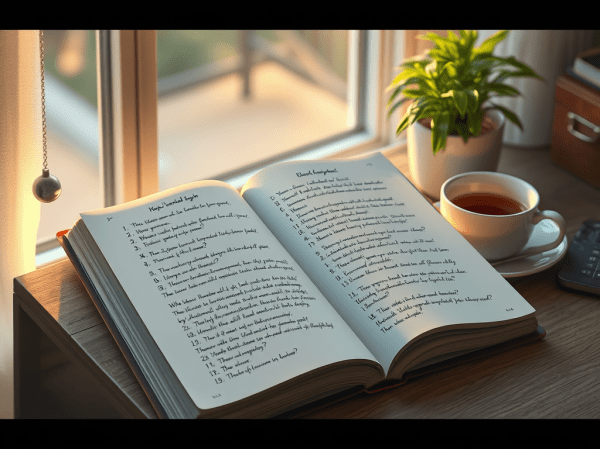
So, I’ve been working on this book—First, Know Thyself—and it’s not really a “book” in the self-help sense. It’s more like a conversation I wish someone had with me years ago. The kind that doesn’t try to fix you, but asks just enough of the right questions to get you thinking, “Wait… what do I actually value? And why do I keep choosing things that don’t match?”

I keep circling this idea that so much stress isn’t about doing too much—it’s about doing what doesn’t line up with who we are. And we feel it. In our bodies. In our relationships. In that gut sense of being slightly off-kilter, even when everything looks “fine” on paper.

The book is part reflection journal, part framework, and part gentle kick in the pants. I wrote it to help those living the chaos of making decisions out of fear, or habit, or someone else’s expectations. And I wanted to explore what it might look like to choose differently—on purpose, with a little more clarity and a lot more compassion.

Anyway, it’s coming along. Slowly. Honestly. And if it helps even one person breathe easier in their own skin, it’ll be worth it.

More soon. 💭

My Brain Wasn’t in Its Right Mind: Why Suicide Isn’t Selfish—It’s Chemistry

I was watching The Bear and contemplating the suicidal thought process.
The people left behind are trying to understand, to deal with the uncertainty and guilt.
But as someone who has survived suicide, let me ease your burden.

When I’m in the throes of suicidal ideation, basically, which means I’m considering and thinking about ending life—my brain is literally not in its right mind.
There is no reason or reasoning. It’s like trying to think through static.
It feels as though you’re swimming in dark air, not even water to hold you up. You can only see two inches in front of you, if that. It’s like there’s a wall blocking your mind from going forward or backward.

And yet, there’s so much noise—a cacophony of sounds: yelling, anguish, tears, laughter.
And here’s the weird part—there’s also nothingness.
No future. No past. No now.
Just the utter absence of hope.

How could I possibly explain that to anyone while I’m in it?

All I wanted was full stop.
To shut it off—the pain, the noise, the heaviness of existing.

Before my attempt, there was pain. Deep, deep loneliness. And the belief that no one would ever understand me.
For me, Jesus healed that pain. He filled the void that tortured me.

And still, I suffer from major depressive disorder—because it is not just trauma. It is chemistry.

But now, when I feel that “dark night of the soul” approaching, I’ve learned to hold on—and to reach out.

I didn’t know that then.
And if I had completed my trial, those left behind would have been left asking:
Why? Could I have seen it? Could I have done more? Did I miss something?

The honest answer is: maybe.
But understand—that is not a statement of guilt.
It’s a statement of awareness.

We need to let others know we see them.
Tell them we love them.
Ask them if they’re okay—really okay.

Not everyone who faces trauma will become suicidal.
But for some of us, our brain chemistry doesn’t bounce back easily—if at all.

When someone is in suicidal pain, their brain is dysregulated.
Serotonin and dopamine—those systems that help with hope, reward, motivation—are off balance.
Not just low—disrupted.

It’s about malfunctioning circuits. It’s about the way stress, trauma, and hopelessness chemically rewire perception.

But the beautiful, painful truth is: rewiring goes both ways.

With help, time, love, faith, and treatment—things can shift.
But no one in that moment can see it.

So, if you’re someone who’s never been there: don’t try to fix the pain. Just stay close.
And if you have been there: I see you.
I’m still here.

And so are you.

If you need emotional support, reach out to the national mental health hotline: 988.

Blog at WordPress.com.

Up ↑