Time Is a Funny Creature

Time is a strange thing. When I’m writing—really writing—I forget it exists. Hours pass in what feels like moments, and I resurface blinking, surprised the sun has moved. But at 3 a.m., cradling a squirmy puppy and begging her to please go back to sleep? Every minute drips like honey from a spoon. Thick. Slow. Unrelenting.

I’ve been thinking about how time doesn’t move the same for the heart as it does for the clock. When I’m in flow, time speeds up. When I’m in waiting, it slows to a crawl. And somehow, both feel precious.

Maybe time’s not meant to be measured in hours and minutes but in presence. In how deeply we’re living the moment we’re in—whether it’s a burst of creative energy or a quiet, tired vigil with a tiny creature learning the rhythm of the world.

Either way, I’m here. Pondering onward.

—Christine

What I think, I become.

There’s this little phrase tucked into Proverbs, and I can’t stop ruminating on it: “As a man thinks in his heart, so is he.”

It’s simple. Elegant. But let’s be honest—it can be deeply unsettling. Yikes. Some of my thoughts…

Note: it doesn’t say “as a man behaves,” or “as a man is told,” or even “as a man believes.” It says thinks. And not just the passing faux pas—we’re talking about the thoughts you’ve spent more than 10 seconds on. The ones you let sink in and settle. These are the deep beliefs that live beneath our words.

And science? As usual… recently caught up to Scripture.


🧠 Psychology Meets Proverbs

Science has now established that stress can be used to enhance performance, not just inhibit it. Bossard and Gomez (2024) studied something called stress-arousal reappraisal. When people learn that their stress response is actually a good thing—that racing heart, sweaty palms, buzzing nerves—it changes everything. People perform better. They feel stronger. Their body handles stress more efficiently.

And it all hinges on one small shift in belief:
Stress is not danger. Stress is energy.

One sentence. One new story.
That’s it.

Recognizing your stress, however it manifests for you, as poorly dispersed energy, changes how you deal with it. The reason for the stress is less important than what you do with the stress-energy. That’s why going for a walk or a run relieves stress. That’s why eating and then burning calories helps us “feel better.” But those coping mechanisms don’t deal with the stressor—just the energy it created.

And this is where Scripture meets science.

The Bible doesn’t sugarcoat stress or hardship. It doesn’t say we won’t face trials—it says we’ll walk through fire. But what it does say, over and over again, is that how we think about those trials changes who we become.

  • “Count it all joy…” (James 1) isn’t naïve—it’s reframing.
  • “Be anxious for nothing…” (Philippians 4) isn’t denial—it’s surrender through trust.
  • “As you think in your heart…” isn’t just a proverb—it’s a law of spiritual becoming.

Our interpretation is our transformation.
How we choose to cope becomes a mirror to the mind.


🪞 The Mirror of the Mind

So here’s the ponder:
What story are you telling yourself?

Whether you realize it or not, you’re writing your character one thought at a time. If I think I’m weak, I’ll act from weakness. If I think stress is a threat, I’ll respond like I’m under attack. But if I learn—slowly, with grace—that discomfort is growth in disguise?

That joy can be found even in pain.
That worry is waste, but the energy it creates can be redirected into purpose.
That is the beginning of mastering your mind.

You’re not a robot acting out fate.
You’re a soul with a story—and every thought you nurture becomes a sentence in that story.


🙏 God’s Gift: The Reframe

I believe with all my heart that Adonai, our Creator, gave us this ability not just to feel but to frame. Not to avoid pain, but to transform it.
To think differently. To see differently. To live differently.

And that gift—your mind, your story—isn’t meant to trap you.
It’s meant to free you.


🌀 So I Ponder…

Maybe Descartes was close: I think, therefore I am.

But I’ll go further:
I think—and in that thinking, I shape who I am becoming.

Not because I’m powerful, but because I was designed to co-create with a powerful God who invites me into the reframing process.

And if my thoughts have that much power—shouldn’t I pause long enough to wonder if they’re true?


Pondering onward,
Christine

The Mask Comes Off in the Fire

In ancient times, people viewed the mind through the heart.
Titus Lucretius Carus, Roman poet and philosopher, once wrote:

“Watch a man in times of adversity to discover what kind of man he is;
for then at last words of truth are drawn from the depths of his heart,
and the mask is torn off.”

This truth still holds.
We don’t find out who we are in our comfort—we find out in the fire.

Not the moment we snap out of exhaustion.
Not the frustration at a coworker
But the moment when everything is on the line.

When the stakes are life and death—what road do we choose?
Do we harm to survive, or find a way to love?
Do we shield our own at the cost of others, or listen for a better way?

I pray I never face that kind of test.
But if I do, I trust that God will lead me.
And I pray I’ll have the wisdom to follow.


What do you believe we carry into those moments?
Where does your strength come from when everything else is stripped away?

🪷 Pondering onward,
Christine

subscribe at

theponderingplace.com/join-the-pondering-place

Forged by Fire, Not Fueled by Rage

Los Angeles is burning again.
Police cars overturned. Flags defaced. Crowds in the streets — not marching in protest, but surging in anger, demanding open borders and shouting down the idea of enforcement as if laws themselves were the enemy.

Watching this unfold, I feel the knot rise in my chest.

And I think of my father.

He came to this country in 1947 — not because he was poor, though he was. Not because he was afraid, though he had every reason to be. He came because the place he was from had been obliterated.

He was German.
He was Jewish.

And in post-war America, that made him suspect from every direction.
Some hated him for being German — the enemy.
Others distrusted him because he was a Jew — even though that identity had nearly cost him his life.

The war may have ended, but the distrust lingered. America was eager to move on, but not yet ready to embrace the displaced — especially not the ones who blurred the lines between categories we find easier to hate.

“Many who sought a safe haven from persecution during the 1930s and 1940s found their efforts thwarted by the United States’ restrictive immigration quotas and the complicated, demanding requirements for obtaining visas. Public opinion in the United States did not favor increased immigration…”
— United States Holocaust Memorial Museum

That was the world my father stepped into.
And it’s the world he had to navigate with quiet strength, resilience, and humility.

He didn’t sneak in.
He didn’t demand to be taken care of.
He secured a sponsor. He filed the paperwork. He paid the fees.
He arrived in New York on the USS Bremen and stood in line at Ellis Island, waiting for this country to say yes.

By 1951, he was wearing a U.S. uniform — a baker in the Korean War — feeding the soldiers of a nation still unsure if it wanted him. That’s the legacy I come from.

So when I see angry mobs insisting that compassion means erasing process, I feel that old ache and a rising frustration. I understand the longing to come here. I really do. America still shines with promise.

But I also understand the cost of doing it right. The patience. The grit. The sacrifice.

My father didn’t demand America bend to him. He bent himself toward her promise.

I believe in compassion. I believe in mercy. But mercy without structure is not mercy. It’s mayhem.

This country needs rules. Because without rules, there is no justice. And without structure, there is no sanctuary.

We owe it to those who came through the fire — not to burn down the country that gave them shelter, but to protect it for those still coming.

Not through entitlement.
Not through rage.
But through honor.

Forged by fire.
Not fueled by rage.


Reference:
United States Holocaust Memorial Museum. “Introduction to the Holocaust.” Holocaust Encyclopedia. https://encyclopedia.ushmm.org/content/en/article/introduction-to-the-holocaust

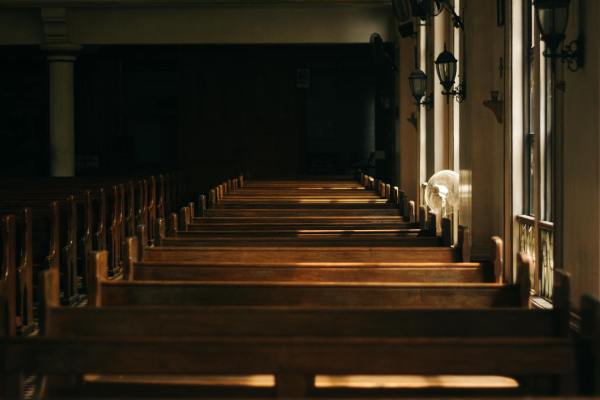
Struggles with the Modern-Day Church: They can’t all be right.

For many years now, I have struggled with the institution of the modern-day church. Whether Catholic, Baptist, Lutheran, or something else, they cannot all be ‘right,’ so logically, that means that they all are wrong. Before you have a cow, churches do a lot of good, and I mean “real” good. They are the arm of God that feeds God’s people, both physically and mentally. They help give social support and purpose. They are a safe place to worship and pray to God in the manner that a person is comfortable with. And (I am ashamed of the USA for having to point this out) they are a safe place for people to believe whatever religion they want to.

Still, the modern church has become something that Jesus would not recognize. I am not convinced that the monstrosity that is the institutional church is what Jesus had in mind when he told Peter, “And on this rock, I will build my church, and the gates of Hades will not overcome it” Matthew 16:18. The term church is translated from the Greek word ekklesia. This word was used in both a religious and a secular context in ancient Greek. Referring generally to an assembly or gathering of people for a particular purpose. Its root comes from “to call out” or “summon forth.”  

What was Jesus calling out? He was calling out to the Jewish people, and anyone else who will listen, to serve one another, to be “one” as He and the Father are one (John 13:34-35, John 17:21). He tells his followers to go and make disciples of all nations, baptizing them and teaching them to obey Gods commandments, and Jesus instructed them how to pray to God Matthew 26:26-28, and He taught them about the Holy Spirit.

He is simply sharing the truth about God, His love, and how we should treat each other.

After Jesus’ death and resurrection, the rest of the New Testament is Peter and Paul’s best grasp of what to do next. The people clamored for structure and rule, like the lambs we are. Peter, Paul, and all the apostles of Jesus did what they could as mere humans to organize the growing followers and answer questions.  Were all their answers correct?  I don’t know. It is safe to assume that since they were the closest to Jesus, the path they led the church on is the best version of a church. But within one generation, there were already schisms, infighting, and power plays. Clement, an early church leader, writes a long letter to the Corinthians, admonishing a younger group of followers who wanted to oust some older leaders. We don’t know all the details, but there was strife, and Clements’ advice was to be kind and follow Jesus. These types of schisms still continue, some so bad they led to war, others the creation of whole new church systems. Hate and pride are ripe among these divisions.

So, what do we know for certain? We know for certain that Mankind will always make a mess of things.  Because of that, each person is solely responsible for their own life and choices. At some point in a person’s life, they must choose God or deny God. From there, one needs to live as Jesus told us: Love the Lord your God with all your heart and with all your soul and with all your mind; love your neighbor as yourself. Jesus said all of the law and the prophets’ hang on these two commandments Matthew 22:40. Jesus knows we are of a simple mind. So, He made it simple for us.

Love the Lord your God with all your heart and with all your soul and with all your mind; love your neighbor as yourself.

I can do this. I understand this. This makes sense.

As for the rest *– “to thine own self be true”, as Shakespeare suggested.

“Let this mind be in you, which was also in Christ Jesus.” — Philippians 2:5

This week, simplify. Jesus said the whole law rests on two things:
“Love the Lord your God… and love your neighbor as yourself.”
Before reacting, posting, judging, or deciding—ask:
Does this reflect love for God and love for my neighbor?

Let everything else sit quietly in the background

Blog at WordPress.com.

Up ↑