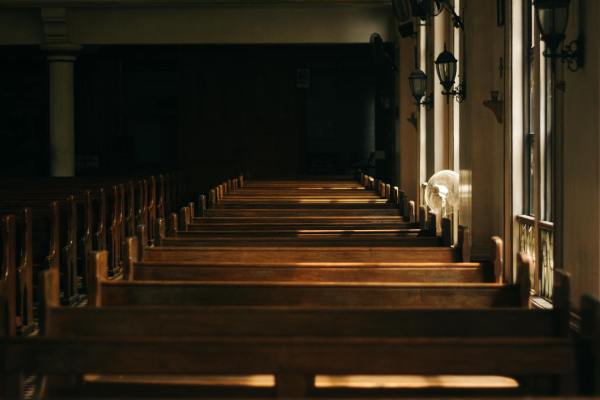
For many years now, I have struggled with the institution of the modern-day church. Whether Catholic, Baptist, Lutheran, or something else, they cannot all be ‘right,’ so logically, that means that they all are wrong. Before you have a cow, churches do a lot of good, and I mean “real” good. They are the arm of God that feeds God’s people, both physically and mentally. They help give social support and purpose. They are a safe place to worship and pray to God in the manner that a person is comfortable with. And (I am ashamed of the USA for having to point this out) they are a safe place for people to believe whatever religion they want to.
Still, the modern church has become something that Jesus would not recognize. I am not convinced that the monstrosity that is the institutional church is what Jesus had in mind when he told Peter, “And on this rock, I will build my church, and the gates of Hades will not overcome it” Matthew 16:18. The term church is translated from the Greek word ekklesia. This word was used in both a religious and a secular context in ancient Greek. Referring generally to an assembly or gathering of people for a particular purpose. Its root comes from “to call out” or “summon forth.”
What was Jesus calling out? He was calling out to the Jewish people, and anyone else who will listen, to serve one another, to be “one” as He and the Father are one (John 13:34-35, John 17:21). He tells his followers to go and make disciples of all nations, baptizing them and teaching them to obey Gods commandments, and Jesus instructed them how to pray to God Matthew 26:26-28, and He taught them about the Holy Spirit.
He is simply sharing the truth about God, His love, and how we should treat each other.
After Jesus’ death and resurrection, the rest of the New Testament is Peter and Paul’s best grasp of what to do next. The people clamored for structure and rule, like the lambs we are. Peter, Paul, and all the apostles of Jesus did what they could as mere humans to organize the growing followers and answer questions. Were all their answers correct? I don’t know. It is safe to assume that since they were the closest to Jesus, the path they led the church on is the best version of a church. But within one generation, there were already schisms, infighting, and power plays. Clement, an early church leader, writes a long letter to the Corinthians, admonishing a younger group of followers who wanted to oust some older leaders. We don’t know all the details, but there was strife, and Clements’ advice was to be kind and follow Jesus. These types of schisms still continue, some so bad they led to war, others the creation of whole new church systems. Hate and pride are ripe among these divisions.
So, what do we know for certain? We know for certain that Mankind will always make a mess of things. Because of that, each person is solely responsible for their own life and choices. At some point in a person’s life, they must choose God or deny God. From there, one needs to live as Jesus told us: Love the Lord your God with all your heart and with all your soul and with all your mind; love your neighbor as yourself. Jesus said all of the law and the prophets’ hang on these two commandments Matthew 22:40. Jesus knows we are of a simple mind. So, He made it simple for us.
Love the Lord your God with all your heart and with all your soul and with all your mind; love your neighbor as yourself.
I can do this. I understand this. This makes sense.
As for the rest *– “to thine own self be true”, as Shakespeare suggested.
“Let this mind be in you, which was also in Christ Jesus.” — Philippians 2:5
This week, simplify. Jesus said the whole law rests on two things:
“Love the Lord your God… and love your neighbor as yourself.”
Before reacting, posting, judging, or deciding—ask:
Does this reflect love for God and love for my neighbor?
Let everything else sit quietly in the background