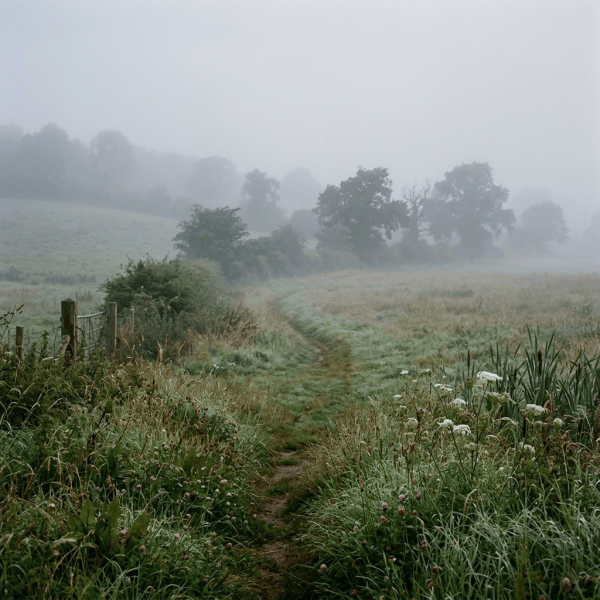
Spring’s Whisper: Why Our Souls Ache for Renewal Each Winter

Ah, friends, can you feel it? That subtle shift in the air, the way the wind carries a hint of warmth instead of a bite? Here in the Outer Banks, where the ocean meets the dunes in eternal conversation, spring is tiptoeing in like a long-lost friend. The crocuses are poking their heads through the sandy soil, and the birds are tuning up their symphony as if they’ve been practicing all winter. It’s finally here—Spring!—and oh, how I’ve ached for it through those gray, relentless months.

Winter has its own quiet beauty, doesn’t it? The stark branches against a steel sky, the hush of snow (or in our case, the rare frost on the beach grass), forcing us inward to reflect and rest. But let’s be honest: by February, that ache sets in. It’s not just the cold seeping into our bones; it’s a deeper longing, a soul-stirring yearning for something fresh, something alive. Why do we pine for spring every year? I think it’s because we’re wired for renewal. Winter strips us bare—exposes our vulnerabilities, our weariness—and in that barrenness, we crave the promise of growth. It’s like our hearts are echoing the earth’s cycle, reminding us that endings aren’t forever; they’re just preludes to beginnings.

This brings me to one of my favorite verses, tucked away in Lamentations 3:22-23: “The steadfast love of the Lord never ceases; his mercies never come to an end; they are new every morning; great is your faithfulness.” New every morning. Isn’t that a balm for the winter-weary soul? Just as the sun rises without fail, painting the horizon in pinks and golds, God’s grace resets with each dawn. No grudges from yesterday’s stumbles, no exhaustion from the long night—pure, unearned freshness. And spring? It’s like God amplifying that truth across the landscape. The seasons themselves are His gentle touch, a rhythmic reminder that life isn’t static. Winter teaches us endurance, autumn whispers of letting go, summer invites abundance, but spring—spring shouts resurrection.

Think about it: those first green shoots pushing through frozen ground, the blossoms unfurling like prayers answered. It’s God’s way of saying, “See? I make all things new.” In the grind of daily life, we might forget His presence, but the seasons won’t let us. They’re His fingerprints on creation, touching us with hope when we need it most. That ache in winter isn’t despair; it’s anticipation, a holy hunger for the divine renewal that’s always coming.

So, as we step into this season, let’s lean into it. Walk barefoot on the warming sand, plant a seed or two, and let the newness soak in. What mercy are you claiming today? What winter weight are you shedding? Ponder with me, dear readers—spring is here, and with it, God’s faithful touch. Great is His faithfulness, indeed.

Glimpses of Heaven in a Fractured World

It’s December 30, 2025—the end of another year—and I’m finally sitting down to write again. The silence here on the blog has stretched longer than I intended. Grief has a way of doing that. When we lost Charlie—yes, Charlie Kirk, that fiery voice of conviction and faith who meant so much to so many of us—it hit like a thunderclap. His sudden passing shook me deeply. I needed time to process, to pray, to let the shock settle into sorrow and then, slowly, into gratitude for the light he carried. I’m still grieving, but I’m also ready to pick up the pen (or keyboard) again, because hope doesn’t pause for our pain.

In the wake of such loss, what sustains me are those fleeting but unmistakable glimpses of Heaven that touch our heart and confirm the Love of God. In a culture that often feels like it’s unraveling—division shouted from every screen, cynicism masquerading as wisdom—there are still these moments that stop you in your tracks and make you think, “Oh Lord, how great are Your works.”

I see it when a young person stands up boldly for truth, even when it costs them friends or followers—like Charlie himself did, time and time again. I see it in small acts too: the stranger who pays for the coffee of the person behind them in line, the family that quietly adopts a child no one else wanted, the neighbor who shovels an elderly widow’s driveway before she even wakes up. These aren’t just good works. They’re previews. Little foretastes of the day when every tear is wiped away, when justice rolls down like waters, and when love isn’t the exception but the air we breathe.

Charlie Kirk spent his life pointing toward that deeper reality—that freedom is a gift from God, that courage isn’t the absence of fear but the refusal to bow to it. And even now, in his absence, the hope he defended feels more vivid. Because hope isn’t rooted in any one person—it’s rooted in the One who conquered death itself.

Stepping into the New Year, I am choosing to lean into that hope. Not the flimsy, wishful kind, but the stubborn, eyes-wide-open kind that says: even here, even now, Heaven is nearer than we think. We get to participate in it every time we choose kindness over contempt, truth over convenience, forgiveness over resentment.

So tell me—what glimpse of Heaven have you caught lately? A moment of unexpected grace? A conversation that restored your faith in people? Share it below. Let’s remind each other that the light is still breaking through.

With a heart that’s healing and still fiercely hopeful,

Christine

My Brain Wasn’t in Its Right Mind: Why Suicide Isn’t Selfish—It’s Chemistry

I was watching The Bear and contemplating the suicidal thought process.
The people left behind are trying to understand, to deal with the uncertainty and guilt.
But as someone who has survived suicide, let me ease your burden.

When I’m in the throes of suicidal ideation, basically, which means I’m considering and thinking about ending life—my brain is literally not in its right mind.
There is no reason or reasoning. It’s like trying to think through static.
It feels as though you’re swimming in dark air, not even water to hold you up. You can only see two inches in front of you, if that. It’s like there’s a wall blocking your mind from going forward or backward.

And yet, there’s so much noise—a cacophony of sounds: yelling, anguish, tears, laughter.
And here’s the weird part—there’s also nothingness.
No future. No past. No now.
Just the utter absence of hope.

How could I possibly explain that to anyone while I’m in it?

All I wanted was full stop.
To shut it off—the pain, the noise, the heaviness of existing.

Before my attempt, there was pain. Deep, deep loneliness. And the belief that no one would ever understand me.
For me, Jesus healed that pain. He filled the void that tortured me.

And still, I suffer from major depressive disorder—because it is not just trauma. It is chemistry.

But now, when I feel that “dark night of the soul” approaching, I’ve learned to hold on—and to reach out.

I didn’t know that then.
And if I had completed my trial, those left behind would have been left asking:
Why? Could I have seen it? Could I have done more? Did I miss something?

The honest answer is: maybe.
But understand—that is not a statement of guilt.
It’s a statement of awareness.

We need to let others know we see them.
Tell them we love them.
Ask them if they’re okay—really okay.

Not everyone who faces trauma will become suicidal.
But for some of us, our brain chemistry doesn’t bounce back easily—if at all.

When someone is in suicidal pain, their brain is dysregulated.
Serotonin and dopamine—those systems that help with hope, reward, motivation—are off balance.
Not just low—disrupted.

It’s about malfunctioning circuits. It’s about the way stress, trauma, and hopelessness chemically rewire perception.

But the beautiful, painful truth is: rewiring goes both ways.

With help, time, love, faith, and treatment—things can shift.
But no one in that moment can see it.

So, if you’re someone who’s never been there: don’t try to fix the pain. Just stay close.
And if you have been there: I see you.
I’m still here.

And so are you.

If you need emotional support, reach out to the national mental health hotline: 988.

What I think, I become.

There’s this little phrase tucked into Proverbs, and I can’t stop ruminating on it: “As a man thinks in his heart, so is he.”

It’s simple. Elegant. But let’s be honest—it can be deeply unsettling. Yikes. Some of my thoughts…

Note: it doesn’t say “as a man behaves,” or “as a man is told,” or even “as a man believes.” It says thinks. And not just the passing faux pas—we’re talking about the thoughts you’ve spent more than 10 seconds on. The ones you let sink in and settle. These are the deep beliefs that live beneath our words.

And science? As usual… recently caught up to Scripture.


🧠 Psychology Meets Proverbs

Science has now established that stress can be used to enhance performance, not just inhibit it. Bossard and Gomez (2024) studied something called stress-arousal reappraisal. When people learn that their stress response is actually a good thing—that racing heart, sweaty palms, buzzing nerves—it changes everything. People perform better. They feel stronger. Their body handles stress more efficiently.

And it all hinges on one small shift in belief:
Stress is not danger. Stress is energy.

One sentence. One new story.
That’s it.

Recognizing your stress, however it manifests for you, as poorly dispersed energy, changes how you deal with it. The reason for the stress is less important than what you do with the stress-energy. That’s why going for a walk or a run relieves stress. That’s why eating and then burning calories helps us “feel better.” But those coping mechanisms don’t deal with the stressor—just the energy it created.

And this is where Scripture meets science.

The Bible doesn’t sugarcoat stress or hardship. It doesn’t say we won’t face trials—it says we’ll walk through fire. But what it does say, over and over again, is that how we think about those trials changes who we become.

  • “Count it all joy…” (James 1) isn’t naïve—it’s reframing.
  • “Be anxious for nothing…” (Philippians 4) isn’t denial—it’s surrender through trust.
  • “As you think in your heart…” isn’t just a proverb—it’s a law of spiritual becoming.

Our interpretation is our transformation.
How we choose to cope becomes a mirror to the mind.


🪞 The Mirror of the Mind

So here’s the ponder:
What story are you telling yourself?

Whether you realize it or not, you’re writing your character one thought at a time. If I think I’m weak, I’ll act from weakness. If I think stress is a threat, I’ll respond like I’m under attack. But if I learn—slowly, with grace—that discomfort is growth in disguise?

That joy can be found even in pain.
That worry is waste, but the energy it creates can be redirected into purpose.
That is the beginning of mastering your mind.

You’re not a robot acting out fate.
You’re a soul with a story—and every thought you nurture becomes a sentence in that story.


🙏 God’s Gift: The Reframe

I believe with all my heart that Adonai, our Creator, gave us this ability not just to feel but to frame. Not to avoid pain, but to transform it.
To think differently. To see differently. To live differently.

And that gift—your mind, your story—isn’t meant to trap you.
It’s meant to free you.


🌀 So I Ponder…

Maybe Descartes was close: I think, therefore I am.

But I’ll go further:
I think—and in that thinking, I shape who I am becoming.

Not because I’m powerful, but because I was designed to co-create with a powerful God who invites me into the reframing process.

And if my thoughts have that much power—shouldn’t I pause long enough to wonder if they’re true?


Pondering onward,
Christine

Forged by Fire, Not Fueled by Rage

Los Angeles is burning again.
Police cars overturned. Flags defaced. Crowds in the streets — not marching in protest, but surging in anger, demanding open borders and shouting down the idea of enforcement as if laws themselves were the enemy.

Watching this unfold, I feel the knot rise in my chest.

And I think of my father.

He came to this country in 1947 — not because he was poor, though he was. Not because he was afraid, though he had every reason to be. He came because the place he was from had been obliterated.

He was German.
He was Jewish.

And in post-war America, that made him suspect from every direction.
Some hated him for being German — the enemy.
Others distrusted him because he was a Jew — even though that identity had nearly cost him his life.

The war may have ended, but the distrust lingered. America was eager to move on, but not yet ready to embrace the displaced — especially not the ones who blurred the lines between categories we find easier to hate.

“Many who sought a safe haven from persecution during the 1930s and 1940s found their efforts thwarted by the United States’ restrictive immigration quotas and the complicated, demanding requirements for obtaining visas. Public opinion in the United States did not favor increased immigration…”
— United States Holocaust Memorial Museum

That was the world my father stepped into.
And it’s the world he had to navigate with quiet strength, resilience, and humility.

He didn’t sneak in.
He didn’t demand to be taken care of.
He secured a sponsor. He filed the paperwork. He paid the fees.
He arrived in New York on the USS Bremen and stood in line at Ellis Island, waiting for this country to say yes.

By 1951, he was wearing a U.S. uniform — a baker in the Korean War — feeding the soldiers of a nation still unsure if it wanted him. That’s the legacy I come from.

So when I see angry mobs insisting that compassion means erasing process, I feel that old ache and a rising frustration. I understand the longing to come here. I really do. America still shines with promise.

But I also understand the cost of doing it right. The patience. The grit. The sacrifice.

My father didn’t demand America bend to him. He bent himself toward her promise.

I believe in compassion. I believe in mercy. But mercy without structure is not mercy. It’s mayhem.

This country needs rules. Because without rules, there is no justice. And without structure, there is no sanctuary.

We owe it to those who came through the fire — not to burn down the country that gave them shelter, but to protect it for those still coming.

Not through entitlement.
Not through rage.
But through honor.

Forged by fire.
Not fueled by rage.


Reference:
United States Holocaust Memorial Museum. “Introduction to the Holocaust.” Holocaust Encyclopedia. https://encyclopedia.ushmm.org/content/en/article/introduction-to-the-holocaust

Again

It’s happening again.

The old hatred—dressed in new clothes—marches forward like it never left.

I keep hearing the same hollow justifications, the same twisting of truth, the same whispers turned to shouts.
And this time, it’s not whispered in back rooms.
It’s livestreamed. Painted on walls. Shouted in the streets of major cities.
And worse—justified by people who claim to care about justice.

But you can always tell when something is older than we are.
This isn’t just politics.
It’s spiritual.

It’s the same serpent from Eden. The same spirit behind Pharaoh, Haman, Hitler.
It slithers through time, striking again at the people God chose to bear His name.

Yes—chose.

Not for dominance. Not for perfection.
But for covenant.

The children of Abraham weren’t selected to be untouchable—they were chosen to be a thread. A promise. A light.
And light, by its nature, reveals what darkness tries to hide.

I think of what Adonai said to Abraham:

“I will make you into a great nation, and I will bless you… and all peoples on earth will be blessed through you.” (Genesis 12:2–3)

That promise wasn’t revoked.
Not with exile.
Not with crucifixion.
Not with conquest.
Not even with genocide.

It still holds.

And I feel the weight of it again—watching history bend toward the same old pattern.
As if we haven’t learned a thing.

We forget the Holocaust while survivors still breathe.
We twist history to fit our hashtags.
We speak of justice, while ignoring the literal blood spilled on synagogue floors.

So what do we do?

We bless.

We stand in that ancient flow and speak what was always meant to be spoken:

May the Lord bless the children of Abraham.
May He guard their hearts and minds.
May He surround them with fire by night and cloud by day.
May He call to the descendants of Isaac, and the scattered ones of Jacob, and those grafted in by grace—
and remind them they are not forgotten.
Not forsaken.
Not alone.

And may we, those watching, never close our eyes.
Not this time.

Blog at WordPress.com.

Up ↑