Glimpses of Heaven in a Fractured World

It’s December 30, 2025—the end of another year—and I’m finally sitting down to write again. The silence here on the blog has stretched longer than I intended. Grief has a way of doing that. When we lost Charlie—yes, Charlie Kirk, that fiery voice of conviction and faith who meant so much to so many of us—it hit like a thunderclap. His sudden passing shook me deeply. I needed time to process, to pray, to let the shock settle into sorrow and then, slowly, into gratitude for the light he carried. I’m still grieving, but I’m also ready to pick up the pen (or keyboard) again, because hope doesn’t pause for our pain.

In the wake of such loss, what sustains me are those fleeting but unmistakable glimpses of Heaven that touch our heart and confirm the Love of God. In a culture that often feels like it’s unraveling—division shouted from every screen, cynicism masquerading as wisdom—there are still these moments that stop you in your tracks and make you think, “Oh Lord, how great are Your works.”

I see it when a young person stands up boldly for truth, even when it costs them friends or followers—like Charlie himself did, time and time again. I see it in small acts too: the stranger who pays for the coffee of the person behind them in line, the family that quietly adopts a child no one else wanted, the neighbor who shovels an elderly widow’s driveway before she even wakes up. These aren’t just good works. They’re previews. Little foretastes of the day when every tear is wiped away, when justice rolls down like waters, and when love isn’t the exception but the air we breathe.

Charlie Kirk spent his life pointing toward that deeper reality—that freedom is a gift from God, that courage isn’t the absence of fear but the refusal to bow to it. And even now, in his absence, the hope he defended feels more vivid. Because hope isn’t rooted in any one person—it’s rooted in the One who conquered death itself.

Stepping into the New Year, I am choosing to lean into that hope. Not the flimsy, wishful kind, but the stubborn, eyes-wide-open kind that says: even here, even now, Heaven is nearer than we think. We get to participate in it every time we choose kindness over contempt, truth over convenience, forgiveness over resentment.

So tell me—what glimpse of Heaven have you caught lately? A moment of unexpected grace? A conversation that restored your faith in people? Share it below. Let’s remind each other that the light is still breaking through.

With a heart that’s healing and still fiercely hopeful,

Christine

Again

It’s happening again.

The old hatred—dressed in new clothes—marches forward like it never left.

I keep hearing the same hollow justifications, the same twisting of truth, the same whispers turned to shouts.
And this time, it’s not whispered in back rooms.
It’s livestreamed. Painted on walls. Shouted in the streets of major cities.
And worse—justified by people who claim to care about justice.

But you can always tell when something is older than we are.
This isn’t just politics.
It’s spiritual.

It’s the same serpent from Eden. The same spirit behind Pharaoh, Haman, Hitler.
It slithers through time, striking again at the people God chose to bear His name.

Yes—chose.

Not for dominance. Not for perfection.
But for covenant.

The children of Abraham weren’t selected to be untouchable—they were chosen to be a thread. A promise. A light.
And light, by its nature, reveals what darkness tries to hide.

I think of what Adonai said to Abraham:

“I will make you into a great nation, and I will bless you… and all peoples on earth will be blessed through you.” (Genesis 12:2–3)

That promise wasn’t revoked.
Not with exile.
Not with crucifixion.
Not with conquest.
Not even with genocide.

It still holds.

And I feel the weight of it again—watching history bend toward the same old pattern.
As if we haven’t learned a thing.

We forget the Holocaust while survivors still breathe.
We twist history to fit our hashtags.
We speak of justice, while ignoring the literal blood spilled on synagogue floors.

So what do we do?

We bless.

We stand in that ancient flow and speak what was always meant to be spoken:

May the Lord bless the children of Abraham.
May He guard their hearts and minds.
May He surround them with fire by night and cloud by day.
May He call to the descendants of Isaac, and the scattered ones of Jacob, and those grafted in by grace—
and remind them they are not forgotten.
Not forsaken.
Not alone.

And may we, those watching, never close our eyes.
Not this time.

When God Speaks in the Silence

There’s a season for pouring into others, and a season for listening to what’s been poured into you.

For many years, I walked the path of a teacher—pouring energy, compassion, and hard-earned wisdom into the lives of others. It was a calling I never questioned, until the voice inside—the one I hadn’t heard in decades—began to rise again.

That voice wasn’t telling me to stop teaching.
It was inviting me to return to something I had buried long ago: writing.

The Play I Wrote… and the One I Didn’t

In grade school, I wrote a play. Just a small story in a child’s handwriting—dreamed up with the kind of boldness only a young imagination can hold. My teacher, bless her, didn’t just pat me on the head. She made the whole class perform it.

It should have been a joyful, affirming moment.
But instead, it silenced me.

My classmates laughed. They told me I didn’t write it. Called me a liar. Made fun of the words I had so lovingly put to the page. And in that strange way childhood wounds do, I absorbed it. I believed them. I stopped sharing my writing.

Not all silence is holy.
Some of it is survival.

I learned to hide the parts of me that felt too tender for ridicule. I learned to be “smart” instead of creative. To teach instead of tell. To pour out what was expected, not what was burning inside me. And yet, even in all those years of silence, my passion burned and God never stopped listening.

A New Season

Now, I find myself in a season I never quite expected—a season of freedom and time. The kind I used to dream of but never thought would be mine. I’m no longer bound by the rhythms of survival or the need to prove my worth. Instead, I find myself sitting with that younger version of me—the girl who wrote a play—and letting her speak again.

Writing now isn’t about proving anything.
It’s about reclaiming what was always mine.
And more importantly, what God never asked me to give up.

“See, I am doing a new thing. Now it springs up; do you not perceive it?” — Isaiah 43:19

Sometimes God speaks through silence—not to quiet us, but to draw us back to our truest voice. The one He planted long before others tried to reshape it.

So here I am. Writing. Reflecting. Creating The Pondering Place not as a platform, but as a space of restoration—for me and for anyone else who has ever been silenced, softened, or shut down.

If any part of your voice has been quieted—by fear, shame, or just the busyness of life—know that God still hears it. And He may be whispering: It’s time.

What voice did you silence in yourself to feel safe, accepted, or “reasonable”?

  • Was it creativity?
  • Boldness?
  • Emotion?
  • Curiosity?

This week, ask God to speak to you in the quiet.
Not with noise, but with clarity.
Not with answers, but with invitation.

“Let this mind be in you, which was also in Christ Jesus.” — Philippians 2:5

Write it down. Revisit it. And if you’re ready—let that voice speak again.

Struggles with the Modern-Day Church: They can’t all be right.

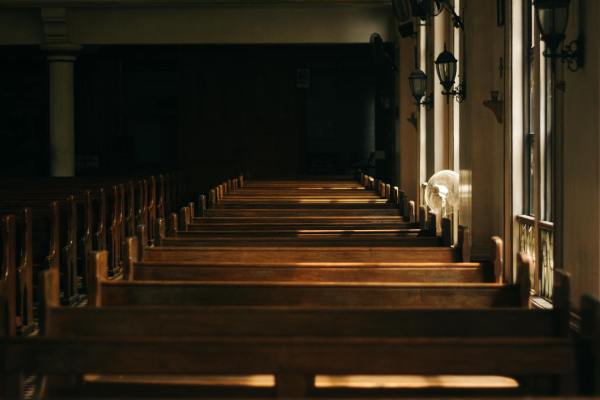
For many years now, I have struggled with the institution of the modern-day church. Whether Catholic, Baptist, Lutheran, or something else, they cannot all be ‘right,’ so logically, that means that they all are wrong. Before you have a cow, churches do a lot of good, and I mean “real” good. They are the arm of God that feeds God’s people, both physically and mentally. They help give social support and purpose. They are a safe place to worship and pray to God in the manner that a person is comfortable with. And (I am ashamed of the USA for having to point this out) they are a safe place for people to believe whatever religion they want to.

Still, the modern church has become something that Jesus would not recognize. I am not convinced that the monstrosity that is the institutional church is what Jesus had in mind when he told Peter, “And on this rock, I will build my church, and the gates of Hades will not overcome it” Matthew 16:18. The term church is translated from the Greek word ekklesia. This word was used in both a religious and a secular context in ancient Greek. Referring generally to an assembly or gathering of people for a particular purpose. Its root comes from “to call out” or “summon forth.”  

What was Jesus calling out? He was calling out to the Jewish people, and anyone else who will listen, to serve one another, to be “one” as He and the Father are one (John 13:34-35, John 17:21). He tells his followers to go and make disciples of all nations, baptizing them and teaching them to obey Gods commandments, and Jesus instructed them how to pray to God Matthew 26:26-28, and He taught them about the Holy Spirit.

He is simply sharing the truth about God, His love, and how we should treat each other.

After Jesus’ death and resurrection, the rest of the New Testament is Peter and Paul’s best grasp of what to do next. The people clamored for structure and rule, like the lambs we are. Peter, Paul, and all the apostles of Jesus did what they could as mere humans to organize the growing followers and answer questions.  Were all their answers correct?  I don’t know. It is safe to assume that since they were the closest to Jesus, the path they led the church on is the best version of a church. But within one generation, there were already schisms, infighting, and power plays. Clement, an early church leader, writes a long letter to the Corinthians, admonishing a younger group of followers who wanted to oust some older leaders. We don’t know all the details, but there was strife, and Clements’ advice was to be kind and follow Jesus. These types of schisms still continue, some so bad they led to war, others the creation of whole new church systems. Hate and pride are ripe among these divisions.

So, what do we know for certain? We know for certain that Mankind will always make a mess of things.  Because of that, each person is solely responsible for their own life and choices. At some point in a person’s life, they must choose God or deny God. From there, one needs to live as Jesus told us: Love the Lord your God with all your heart and with all your soul and with all your mind; love your neighbor as yourself. Jesus said all of the law and the prophets’ hang on these two commandments Matthew 22:40. Jesus knows we are of a simple mind. So, He made it simple for us.

Love the Lord your God with all your heart and with all your soul and with all your mind; love your neighbor as yourself.

I can do this. I understand this. This makes sense.

As for the rest *– “to thine own self be true”, as Shakespeare suggested.

“Let this mind be in you, which was also in Christ Jesus.” — Philippians 2:5

This week, simplify. Jesus said the whole law rests on two things:
“Love the Lord your God… and love your neighbor as yourself.”
Before reacting, posting, judging, or deciding—ask:
Does this reflect love for God and love for my neighbor?

Let everything else sit quietly in the background

Blog at WordPress.com.

Up ↑