
—but he couldn’t have imagined what we’d do with it.
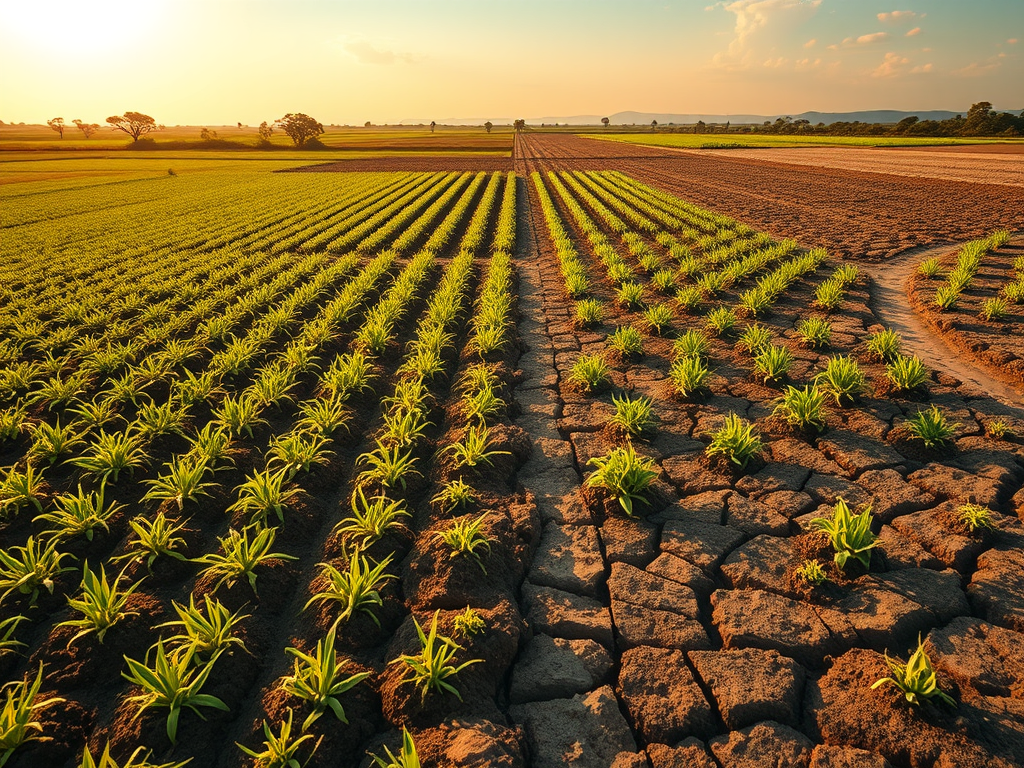
I’ve been reading Five Weeks in a Balloon, and there’s this line that stopped me in my tracks. Verne observes that Europe’s soil is becoming exhausted, and that America will one day face the same fate. Eventually, he predicts, Africa will become the agricultural center of the world.
It’s eerie how right he was.
Even in the 1800s, the land was already giving its warning. Generations of over-farming had stripped the soil bare. And he could see what was coming: extraction without regeneration, empire without restraint. He understood that the Earth doesn’t just keep giving. It keeps score.
But what he couldn’t have predicted was how far we’d go to override the land’s limits.
Instead of listening, we threw technology at the problem—fertilizers, monocrops, irrigation systems that drained rivers dry. We pushed yields higher and faster, with no thought to the long game. We engineered volume, not vitality. And now? We’re circling back. In the States, we’re just now starting to remove toxic chemicals from our food—finally catching up to what Europe understood decades ago. We talk about organic, sustainable, chemical-free like it’s cutting-edge… but we still don’t have a clue how to meet global demand without exhausting the Earth in the process.
Verne imagined Africa as a rising breadbasket. And today, yes—it holds some of the richest uncultivated land on the planet. But so much of that land is leased out to foreign entities, used for exports, or left vulnerable to climate shocks. We took promise and turned it into profit.
So here’s what I’m sitting with:
Can we still be innovative without being so destructive?
Can we imagine a future where technology partners with nature instead of overpowering it? Where food systems aren’t just efficient, but equitable? Where abundance doesn’t mean burnout?
And in the face of something so big, I ask the question I think most of us quietly carry: What can one person do?
Maybe we start by paying attention. By choosing differently, even in small ways. By asking better questions about what we eat, how it’s grown, and who gets to flourish. Maybe we start by imagining a future that doesn’t just feed the world—but heals it.
 The Pondering Place
Have you heard of Permaculture? Right now one of the leading authorities is Geoff Lawton. He speaks of how to restore soil, water retention, food forests, and much more.
LikeLike